Imagine you are going to work on a construction site, where every potential hazard has been identified and controlled before it becomes a danger. That is Singapore Construction Site Safety and Risk Assessment. Ensuring safe operations while keeping you and your team safe.
In Singapore, construction sites are bustling with activity, but safety always comes first. Whether you are an experienced worker or a new worker, you need to understand risk assessment properly to prevent accidents. Understanding risk assessment is crucial to complying with workplace safety and health (WSH) regulations.
Why Is Risk Assessment Important in Singapore Construction Sites?
Risk assessment is the identification of potential hazards. The process of assessing risks to workers and implementing control measures to reduce accidents in the workplace. In Singapore, under the Workplace Safety and Health Act (WSHA), employers conduct regular risk assessments to ensure a safe working environment.
Key Benefits of Risk Assessment:
- ✅ Prevents accidents by identifying hazards early
- ✅ Reduces downtime caused by injuries or regulatory violations
- ✅ Improves efficiency by streamlining safety protocols
- ✅ Ensures compliance with Singapore’s strict safety laws
Common Hazards in Singapore Construction Sites
Before conducting a risk assessment, workers and supervisors must recognize the most common dangers on construction sites:
- Falls from Heights (Scaffolding, Ladders, Roofs)
Control Measures: Use guardrails, safety harnesses, and proper scaffolding inspections. - Moving Machinery & Equipment (Cranes, Forklifts, Excavators)
Control Measures: Ensure operator training, clear signaling, and restricted zones. - Electrical Hazards (Exposed Wiring, Overloaded Circuits)
Control Measures: Regular inspections, proper grounding, and lockout/tagout procedures. - Falling Objects (Debris, Tools, Materials)
Control Measures: Hard hats, toe boards, and secure storage of materials. - Manual Handling & Ergonomics (Lifting Heavy Loads)
Control Measures: Proper lifting techniques, mechanical aids, and worker training.
How to Conduct a Risk Assessment in 5 Steps
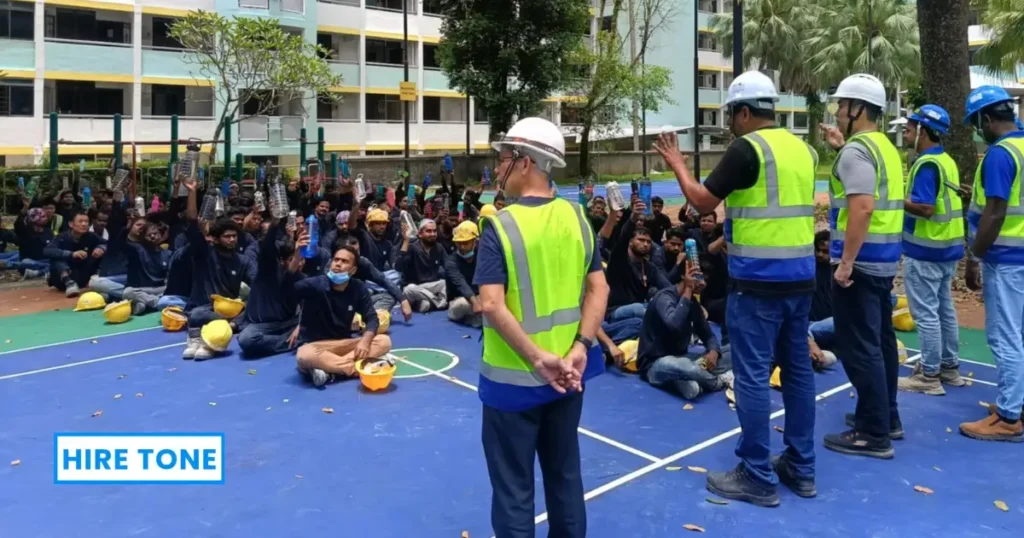
A structured risk assessment helps mitigate hazards effectively. Here’s a simple process:
Step 1: Identify Hazards
Walk through the site and note potential dangers (Falling object, Uneven surfaces, chemical exposure ETC).
Review past incident reports for recurring issues.
Step 2: Assess the Risk Level
Determine the likelihood (Low/Medium/High) and severity (Minor/Moderate/Major) of each hazard.
| Hazard | Likelihood | Severity | Risk Level |
|---|---|---|---|
| Fall from scaffold | High | Major | Critical |
| Electric shock | Medium | Moderate | Moderate |
Step 3: Implement Control Measures
- Eliminate the hazard (e.g., replace faulty equipment).
- Substitute with safer alternatives (e.g., non-toxic chemicals).
- Isolate the hazard (e.g., barricade dangerous zones).
- Use PPE (e.g., helmets, gloves, safety boots).
Step 4: Monitor & Review
Regularly inspect the site for new hazards.
Update risk assessments after incidents or changes in work processes.
Step 5: Train Workers
Ensure all workers understand safety protocols.
Conduct toolbox meetings to reinforce best practices.
Singapore’s WSH Regulations & Penalties
The Ministry of Manpower (MOM) enforces strict safety laws. Failure to comply can result in:
- ⚠ Fines up to $500,000 for companies
- ⚠ Imprisonment for serious violations
- ⚠ Work stoppage orders for unsafe sites
“Safety is not just a regulation—it’s a responsibility. Every worker deserves to go home unharmed at the end of the day.” – Singapore Workplace Safety Officer
Final Safety Tips for Construction Workers
- ✔ Always wear PPE (hard hats, high-vis vests, safety boots).
- ✔ Report unsafe conditions immediately to supervisors.
- ✔ Stay alert—avoid distractions like mobile phones near heavy machinery.
- ✔ Attend safety training regularly to stay updated.
Conclusion
Singapore Construction Site Safety and Risk Assessment is essential to ensure the safety of workers and the safe execution of projects. Hazards must be identified and controls implemented. By following WSH guidelines, construction teams can reduce risks and create a safe workplace.
Stay vigilant, stay safe! 🚧👷♂️